Bakuman 76
I love the dialogue between Hattori and Yujiro, particularly Yujiro pushing for Hattori to accept Akino’s feelings.
In fact, this is a fantastic Hattori chapter overall.
“I dunno about that” is perfect for how awkwardly Tanto is being treated.
Great tension and buildup towards… something? Mashiro has to crack soon.
Eiji on TV! Still as lovably weird as ever. He calls out Ashirogi as his rival! Wow.
Mashiro breaks down, directly calls Azuki while crying and confesses to wanting to quit Tanto? Fantastic.
Final Flash: Brilliant chapter, and a huge, long-awaited plot point. The series just keeps improving. Very excited to read further.
Katekyo Hitman Reborn 280
Too much dialogue, most of which has already been covered. Move it along, please.
Some of these closeups feature much better art than most of the future arc. Clean, concise, easily legible.
It’s way too late for a meaningful Byakuran flashback. If you wanted me to care about him, this should have come 50 chapters ago.
Disappointing that we must wait yet another week for the full climax.
Final Flash: This is it. I’m ready for conclusion, fallout, and a new arc. Here’s your last chance to redeem yourself, Amano.
One Piece 576
That huge guy was San Juan Wolf, the largest being on the planet… and he’s part of Blackbeard’s crew? Along with several of the world’s worst criminals?
Blackbeard renouncing the title of Shichibukai?
The panel with everyone attacking Whitebeard?
Whitebeard not only knowing the Will of D, but also telling Blackbeard that he hasn’t truly inherited it?
The final scene?
Final Flash: Awe-inspiring. What a chapter.
Hunter x Hunter 299
[chapter link]
… ok, this is a little too bizarre. The King eating his subordinates is one thing, but their reactions are creepy and unnecessarily sexual.
The unintentional comedy scale is off the charts on these two-page spreads.
That was it? The chapter’s over?
Final Flash: Complete non-chapter. Horrible.
Naruto 485
How many times are we going to have to see Naruto and Sasuke run straight at each other?
Sasuke has gone from angst-ridden youth (irritating but believable) to insane one-dimensional avenger (unacceptable). He and Madara are prime examples of shocking character devolution.
The only interesting character in this entire scenario is Kakashi, who actually has the cojones to do something. Of course he’s held back.
Really? Was there enough plot in this chapter to save Naruto’s ridiculous plan for next week?
Final Flash: Poor. For all the unnecessary exposition we’re getting, we better get a good fight out of this.
Bleach 394
Extinguir is still a stupid name, and it still just looks like a stand.
White backgrounds! Speed lines!
Hmm, Sokotsu Domination looks familiar. Compare Bleach 394 (March 2010):
 … with One Piece 427 (September 2006):
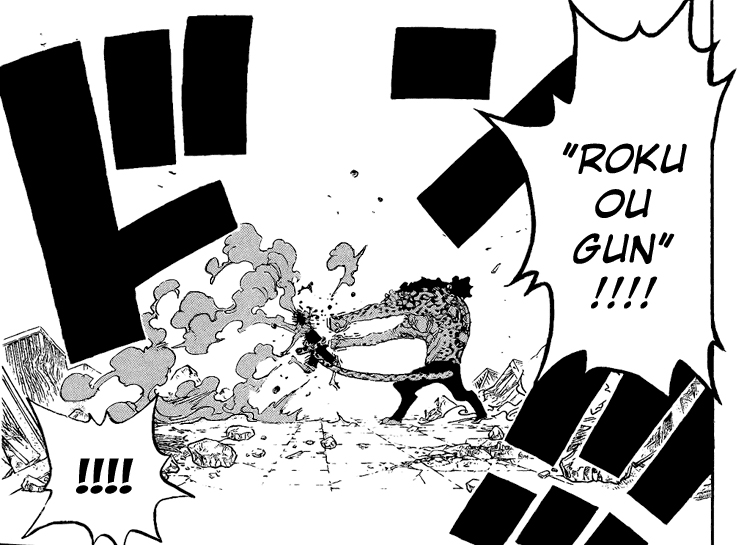
Final Flash: Yet another irrelevant non-Ichigo fight. Boring.
Weekly Power Rankings – 2/21 – 2/27
Weekly Power Rankings – 2/14 – 2/20
Live Action Yankee-kun to Megane-chan Confirmed
Yankee-kun to Megane-chan, a fantastic comedy series currently running in Weekly Shonen Magazine, will be adapted into a live-action drama, to air on the Japanese network TBS. The news was confirmed in Issue #13 of WSM. The drama will air every Friday at 10pm beginning April 23.
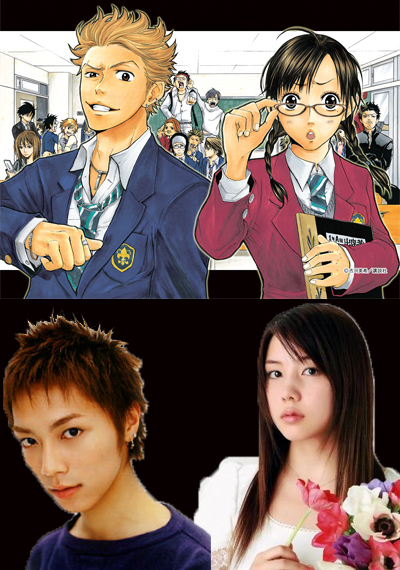
Narimiya Hiroki (Gokusen, Nana, Bloody Monday) has been cast as protagonist Shinagawa Daichi, while female lead Adachi Hana will be played by Naka Riisa (The Girl Who Leapt Through Time, Kami no Shizuku).
The two lead actors have impressive credentials, particularly Narimiya, but are they appropriate visual matches? Decide for yourself:
 Source: News-Paradise
History of Shonen Addendum
For those of you who came tonight: Thank you! I’m very pleased with how the event went overall, and by the size of the crowd. I’m somewhat amazed that I was able to speak for nearly five hours, but time seemed to fly by (at least, to me), so I hope it was as entertaining for all of you as it was for me. I loved the casual atmosphere, and I was completely flattered that non-regulars to anime club actually came to watch me. Thank you so much.
The series list I promised is right here:
Series in bold are an arbitrary declaration of the more important titles, and are a decent indication of series to read in terms of overall relevance (not necessarily quality).
I must ask that no one use the list for any purpose other than personal enjoyment or reference without my permission.
—
I also want to briefly elaborate on a claim I made a few times about some series, which may be hard to understand without proper explanation. I mentioned how some series are able to do comedy brilliantly well, but then feature uncharacteristically heartfelt chapters which were done very effectively. A perfect example:
How to set up and deliver a punchline: Gintama 171
How to charm your readers: Gintama 172
The effect is only strengthened by the fact that these chapters are back-to-back. The non-comedy chapters of Sket Dance achieve a similar effect.
—
For the record, I wholeheartedly recommend changing your online manga reader to MangaToshokan. Uncompressed images and a clean website layout make it markedly better than OneManga or MangaFox, which I only use for anything not yet uploaded to MT.
—
If you’ve been inspired to discover new series, and are pleased with what you find, please let me know! I’m curious to know how well-received my recommendations are.
Cross Game Retrospective

Cross Game, the most recent series by renowned mangaka Mitsuru Adachi (Touch, Rough, H2) has finally come to a close. Beginning in Shonen Sunday in September 2005, it has entertained readers for nearly five years, and with a breathtaking climax that does justice to the quality of the entirety of the work, it belongs in any recommended reading list.
Cross Game follows Kitamura Kou, the son of a sports equipment store owner, a pleasant, somewhat sarcastic boy with only enough of an interest in sports to push sales for his family’s shop. Most of the story and character development is driven by the relationship between Kou and the sisters of the Tsukishima family, primarily the middle two sisters, Wakaba and Aoba. Kou and Wakaba were born the same day in the same hospital, and have shared a close relationship since birth, while Aoba is jealous of the attention her older sister gives to Kou. Aoba is a naturally talented pitcher, and Kou, with an increasing interest in baseball, uses her as the inspiration after which he models his pitching form. These scenarios, coupled with a momentous event early in the series, form the foundation of the fascinating relationship between Kou and Aoba, which itself is the focal point of Cross Game.
That focus on character relationships is complemented by Adachi’s ability to give his characters a familiar humanity. The current shonen landscape is overwhelmed by unrealistic characters defined almost entirely by one trait each. Natsu (Fairy Tail) is indomitable. Sasuke (Naruto) seeks revenge. Some series even feature an entire cast of one-note characters; Mahou Sensei Negima! is an enjoyable series, but the members of Class 3-A are hardly shining examples of character depth or development. By contrast, the cast of Cross Game features realistic complexity, with entirely ordinary traits used tastefully. Senda is showy, awkward, insecure, yet positive. Azuma is independent, determined, and driven (but not ruled) by his past. All are human traits, and all are displayed in balance with each other to further reinforce the series’ realism.
Similarly, the writing is true to life. On the diamond, Cross Game accurately portrays the duality of Japanese youth baseball, combining the professionalism of self-imposed pressure to strive for Koshien with enough mistakes and immaturity to remind the reader that despite any measure of success, the protagonists are still a group of kids. Unlike other sports series such as Prince of Tennis, which announced the dominance of its stars too early and robbed the series of any building anticipation, Cross Game uncovers talent slowly and subtly. Kou’s pitching ability grows throughout the course of the series, and that growth is largely dependent upon those around him, particularly Aoba. Meanwhile, the romantic comedy elements of the series are intentionally faint. Even quality shonen romantic comedies like Suzuka put the characters’ feelings on full display, leaving nothing to the imagination, and depend heavily upon fan-service. By contrast, Cross Game credits the intelligence of its audience with characters authentically secretive about their romantic interests, characters with which the reader can relate.
As a visual piece, the art style is appropriate for the tone of the story. Each character design is clean and suitable to each personality, if perhaps somewhat familiar. After all, when presented with a picture from one of his many series, even an avid Adachi fan would be forgiven for confusing one character with another:
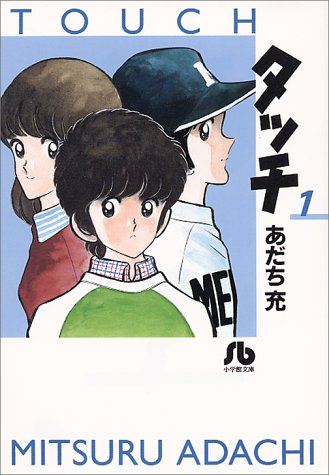 Touch |
 H2 |
 Cross Game |
That said, Adachi deserves as much credit for his art as for his writing. The foreground action is supported by detailed backgrounds evoking a calm suburban Japan. Scenes are also carefully interspersed with views of the landscape or wordless crowd reaction, speaking volumes through art alone. In fact, Cross Game was used in a 2007 academic presentation to the International Research Society for Children’s Literature as an example of silent narrative. Many series have both excellent art and writing, but few series feature art and writing that complement each other so perfectly.
Like respected predecessors Slam Dunk or Hikaru no Go, Cross Game transcends its genre. It is not just an excellent baseball series, but an excellent series, requiring no particular love for or interest in the sport. The characters are diverse, the story is compelling, the art is enriching, but above all, the cohesive work is brilliant. Cross Game has long been well-received, even winning the 54th Shogakukan Manga Award for shonen, and it will continue to receive far more lofty praise than a review on a blog, but nonetheless, I offer my personal recommendation:
I read a huge amount of manga, some out of self-appointed obligation but most out of enjoyment. That enjoyment varies, but even the most amazing chapters of my favorite series rarely elicit more than a smile and a good mood from me.
Chapter 168 of Cross Game froze me in my seat, sent chills down my spine, and left me with an impression I still feel three weeks after reading.
I hope you read it, and I hope you feel the same.
Weekly Power Rankings – 2/7 – 2/13
History of Shonen Encore
I will be re-presenting my History of Shonen panel (originally presented at Ohayocon 2010) at Animate! @ Ohio State, the anime club at The Ohio State University, Friday 2/19, at approximately 7pm. I’ll have use of my room for around five hours, and while I don’t intend to take nearly that long to speak, I will actually have time to properly address every series and topic. No membership to the club is required for attendance. I hope to see you there!
Directions are best found on the Animate! @ OSU website. The nearest parking is a garage essentially at the corner of Woodruff and College.
Weekly Power Rankings – 1/31 – 2/6
Medaka Box Vomic
As a followup to the recent post regarding Medaka Box, here is the recently-released vomic (officially-made manga with voice acting).
Shonen Beam Social Network


 Shonen Beam